Key Largo Canals And Bay Access For Home Buyers
July 23, 2026
July 23, 2026
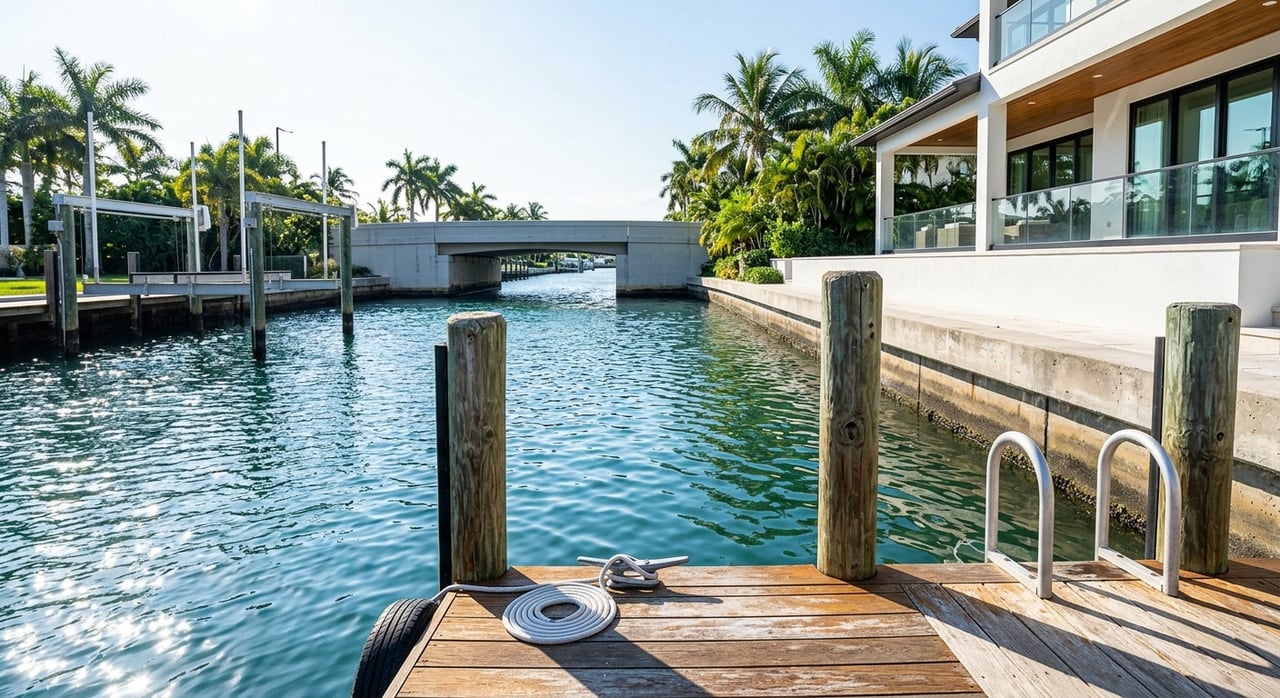
Wondering whether a Key Largo waterfront home will actually work for your boat? That is one of the smartest questions you can ask. In Key Largo, the real story is not just whether a property sits on a canal, but where that canal leads, how deep the route stays, what bridge clearances you face, and whether the dock setup is legally supportable. This guide will help you understand what to check before you buy so you can match the home to the boating lifestyle you want. Let’s dive in.
In Key Largo, not all waterfront access works the same way. A home may be on a canal, but the boating experience depends on the route from that canal to the bay or ocean.
That matters because the Florida Keys sit among shallow and connected water bodies like Barnes Sound, Blackwater Sound, and Florida Bay. NOAA describes the area as a chain of low islands separated by shallow waters, which means boating access can change a lot from one location to the next.
Many buyers hear “bay access” and assume easy boating. In reality, parts of Florida Bay are shallow and irregular, and NOAA notes that only small craft can navigate its eastern part.
That means bay access can still be useful, but it may not fit every boat. If you own a deeper-draft vessel or want more flexibility, you need to look beyond the listing description and study the actual route.
On the ocean side, Hawk Channel is the main navigable passage inside the Florida Reefs and outside the Keys. NOAA reports depths ranging from about 9 to 34 feet, which can make it very different from shallower bay routes.
Even so, ocean access is not just about getting out to open water. Key Largo sits within the Florida Keys National Marine Sanctuary, and local boating rules shape how you use the water once you leave the dock.
When you evaluate a Key Largo canal-front property, focus on the full path your boat would travel. A short list can help you ask better questions:
This kind of review can save you from buying a home that looks perfect on paper but feels limiting on the water.
Largo Sound is one example of why route details matter. NOAA describes it as about 1.8 miles long and 0.8 mile wide, with general depths of 1 to 6 feet.
The entrance channel from Hawk Channel through South Sound Creek is described by NOAA as narrow and difficult, and it can fill with southerly winds. So even though a property may appear close to ocean-side water on a map, the boating reality may be more restrictive than expected.
NOAA also notes a narrow unmarked channel above South Sound Creek that leads to an unnamed bay, with unknown bridge clearance. For buyers, that is a good reminder that map distance is never enough.
The Marvin D. Adams Waterway is another route buyers should understand. It enters Largo Sound from Blackwater Sound and is crossed by twin fixed U.S. 1 spans, an adjacent pedestrian bridge, overhead cables, and an overhead pipeline.
NOAA lists 14 feet of clearance for the U.S. 1 spans. If your boat has a tower, hardtop, antennas, or added height when loaded, that number matters just as much as draft.
This waterway also shows that access can come with nearby boating support. NOAA reports that the state park marina on the west side offers berths, electricity, a launching ramp, a pump-out station, water, and ice.
For buyers looking at the east side of Key Largo, Ocean Reef Harbor offers another useful example. NOAA describes a privately dredged channel with a centerline controlling depth of 7 feet, plus an adjacent privately dredged residential channel also reported at 7 feet.
That does not mean every nearby property has the same boating fit. It does mean buyers should compare their boat’s draft and height against a specific route, not assume all canal homes in an area offer the same convenience.
A canal that works at one time of day may feel very different at low tide. NOAA guidance for the Florida Keys says the greatest tidal range occurs around the full moon and new moon, and boaters should use extra caution on low tide.
NOAA also notes strong tidal currents through openings between the Keys, and wind can modify those currents. For buyers, that means a route that seems manageable in calm conditions may become less forgiving when tide and wind work against you.
Many buyers focus only on water depth, but vertical clearance matters too. In the Keys, NOAA lists 14 feet of clearance over the Marvin D. Adams Waterway and 15 feet at the Tavernier Creek bridge just south of Key Largo.
If your boat has extra height above the waterline, those bridge limits can narrow your options fast. A good waterfront home fit depends on your full boat profile, including draft, beam, hardtop, tower, and antennas.
In Key Largo, dock and shoreline features are not something to assume. Monroe County defines a dock as a fixed or floating structure used for landing, berthing, or securing vessels, and it treats canal bank or shoreline alteration as development.
That is why permit history matters before closing. If a dock, shoreline change, or seawall work was done without proper approval, you do not want to discover that after you take ownership.
Monroe County says docking facilities may be developed on the shoreline of lots in a subdivision only when certain conditions are met. Among those conditions, the facility must be in a channel, canal, or basin that connects five or more contiguous lots, was dredged before 1986, and has a mean low water depth of at least minus 4 feet at the terminal end of the dock.
That is a technical standard, but it has a practical takeaway for buyers. You should verify that the canal and dock situation at a property lines up with county standards, especially if future dock work is part of your plan.
Monroe County also says no new bulkheads, seawalls, or other hardened vertical shoreline structures are permitted on open water. On residential canals and altered shorelines, the county prefers native vegetation, with riprap or sloping rock revetments used when vegetation will not prevent erosion.
If you are buying with the idea of changing the shoreline later, these rules matter. Your improvement options may be more limited than they would be in other waterfront markets.
For canal work, Monroe County says projects may require review by the county, the Florida Department of Environmental Protection, the U.S. Army Corps of Engineers, South Florida Water Management District, and the Florida Keys National Marine Sanctuary.
The county also notes that dredging or removal of canal plugs is prohibited by one or more sanctuary regulations. In simple terms, buyers should not assume they can “fix” a shallow or challenged canal after purchase.
Waterfront due diligence in Key Largo also includes canal condition. Monroe County’s canal restoration information says 96 canals in unincorporated Monroe County have poor or fair water quality ratings that do not meet state standards.
The county ranks canals using factors that include dissolved oxygen, nutrient accumulation, canal depth, connectivity to nearshore waters, and the number of parcels along the canal. For buyers, that means canal quality is not just about looks. It can be part of the long-term ownership picture.
Owning waterfront property in Key Largo also means boating in a regulated marine environment. Sanctuary-wide rules prohibit anchoring on living coral, and the sanctuary maintains more than 800 buoys, including more than 600 mooring buoys available on a first-come, first-served basis at no cost.
Standard mooring buoys are intended for vessels up to 59 feet, while larger buoys serve vessels from 60 to 100 feet at selected locations. If you plan to spend time reef-side, it helps to know that responsible boating here includes using the systems already in place.
NOAA also says that, except in marked channels, vessels may not exceed 4.6 miles per hour or no wake within 300 feet of residential shorelines, stationary vessels, or navigational aids marking reefs. That affects how quickly you move once you leave your canal or approach shore.
If you are shopping for a canal-front home in Key Largo, the best move is to start with your boating needs before you fall in love with the house. Think about your boat’s draft, height, and how often you want quick access to bay water, ocean water, or marina services.
From there, review the route, bridge clearances, low-tide realities, and the property’s dock and permit history. In Key Largo, a great waterfront purchase is not just about the address. It is about how well the property supports the way you actually want to live on the water.
If you want help sorting through canal access, dockage, and real boating fit in Key Largo, connect with Shane Wilson. Local waterfront knowledge can make the difference between a home that simply looks good on the map and one that truly works for your lifestyle.
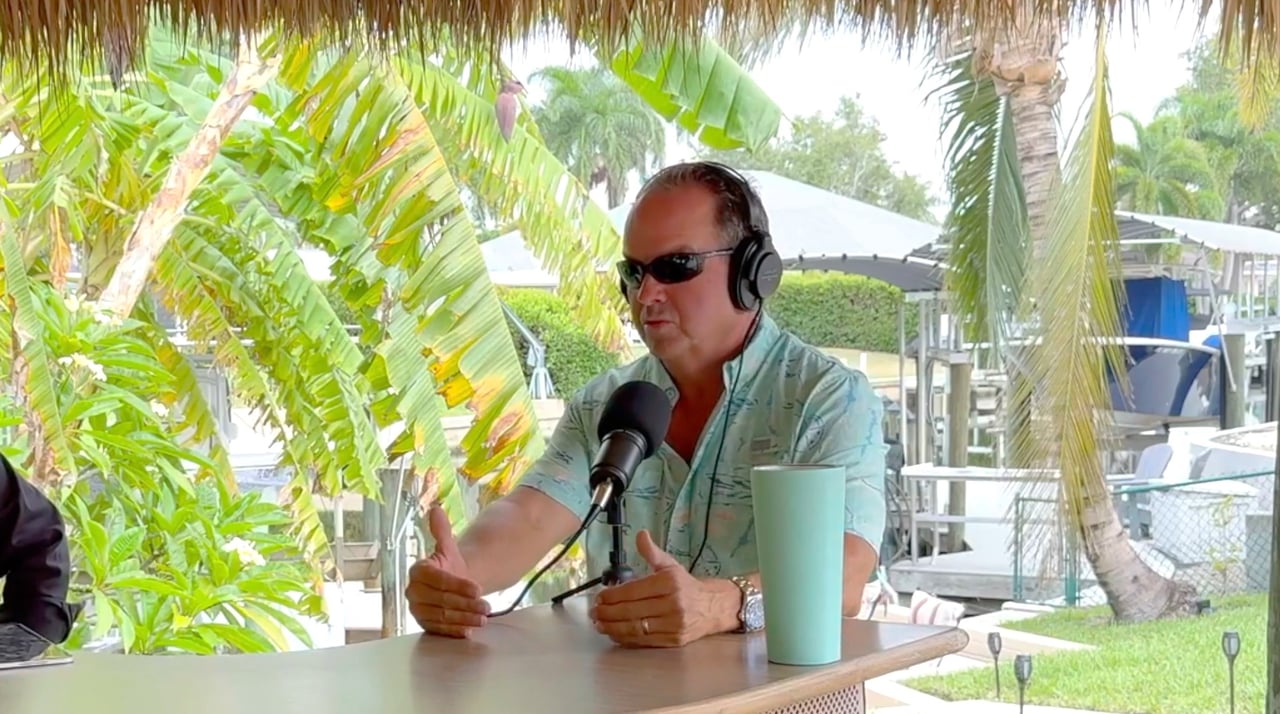
Florida Keys
Before I show a Florida waterfront home in the Keys, Cape Coral, or Fort Myers, I ask what boat you want. Draft, bridge height, and tide decide the neighborhood.
Decades of waterfront expertise, deep local roots, and a passion for the Florida lifestyle define every client experience. The Shane “Waterfront” Wilson combines extensive real estate knowledge with unmatched insight into the Florida Keys and Southwest Florida markets—helping buyers and sellers navigate every step with confidence and ease.
Get In Touch With Our Team
SHANE "WATERFRONT" WILSON
ADDRESS ISLAMORADA 85960 OVERSEAS HWY STE 4 ISLAMORADA, FL 33036 FORT MYERS 7270-4 COLLEGE PKWY FORT MYERS, FL 33907