The Question I Ask Before I Show You a Florida Waterfront Home - Shane 'Waterfront' Wilson
Florida Keys Shane "Waterfront" Wilson October 4, 2026
Florida Keys Shane "Waterfront" Wilson October 4, 2026
I do not start with the kitchen.
When someone calls about a Florida Waterfront Home in the Keys, Fort Myers, Cape Coral, or Naples, and shows an interest in boating...
I start with this qualifying question:
What kind of boat do you want?
If the answer is a 44 Contender, a 39 center console, a 50-foot Viking, or a 50-foot Bertram, a lot of neighborhoods that look perfect on paper come off the list.
Not because the house is wrong.
Because the water is wrong.
People coming from Michigan, Chicago, and other lake markets do not have tides. They do not have king tides. They do not have nine-and-a-half-foot bridges, a four-foot opening to the river, or a coral head sitting in the middle of a channel they have run a thousand times. Down here those details decide whether the backyard boat life actually works — or whether you spend the next ten years waiting on tide and tearing up gear cases.
I have sold thousands of homes over 33 years. I have also run aground more times than I like to admit. Both of those things matter. The first one gets you in the door. The second one keeps you from buying the wrong canal.
Three numbers that pick the neighborhood
If you want the Florida boat lifestyle, map three things to the property before you fall in love with the view.
Miss any one of those and the house can still be beautiful. The lifestyle just will not match the photograph.
The Keys. There are neighborhoods where the canal is shallower, and getting from the canal to open water is shallower still. A buyer says he wants that 44 Contender or that 39. That neighborhood will not work. At low tide you cannot get the boat in and out. We do not have tides on Michigan lakes. We have tides here. On a full moon you can get a king tide, and a king low tide. There are channels I always run in my Contender. On a king low I do not. I go around. I know I will hit bottom and tear up the gear cases.
Fort Myers riverfront and McGregor Isles. We have sold riverfront homes where the buyer wants a 50-foot Viking or a 50-foot Bertram. It is not going to work. There is not enough water. Come a mile down the river and you can have an average mean depth of about eight feet all the way to the seawall. Buyers do not know that unless someone who runs those waters tells them. In my own neighborhood, McGregor Isles, we dredged the canals to an average mean depth of about five feet. At the opening to the river you are looking at about four feet. That big boat is not coming in.
Whiskey Creek. People love the newer homes. Then I ask if they know there is a 13-and-a-half-foot bridge to go under — the one you cross on McGregor over Whiskey Creek. In real life that means a boat of about 39 feet or less, maybe 42, and no second station. You will never make it under that bridge with a tower.
Cape Coral. Average bridge height is nine to nine-and-a-half feet at average mean tide. A 39 Contender with a second station is not going under that bridge. I just sold dear friends a house there and took them in the boat. About 52 minutes up the canal system. In my Contender we had about 18 feet of clearance at average mean tide. Their max boat is 24 to 26 feet. They will never have an issue. The people who want larger boats have a problem most buyers never think about until they own the house.
Georgetown. The canal runs almost to McGregor Boulevard. Cool houses, a little marina, a handful of slips. As you get further in, it gets super shallow. I would not make a habit of taking my 31 Contender in there. The sweet-spot boat is a flats boat, maybe up to 25 or 26 feet, with a jack plate. The 24-foot bay boat we keep on the lift will go almost anywhere. Jack plate up, motor trimmed, I can run in 12 or 13 inches of water.
A second station is a fishing tool and a bridge problem. On the bay boat I am up in two feet of water and I can see a redfish tailing, a snook on the mangroves, a fat gator trout. The people downstairs cannot. Those two facts — better sight and more height — have to live in the same conversation when you pick a canal.
The boats I actually run
When we had the 48 Cabo, I wanted six to six-and-a-half feet to plane off and felt all right in about four once we were running. Put big 36-inch wheels in gear and the stern drops. On that boat, about six inches just going into gear. On the bay boat, takeoff does not really bury the stern. On the Contender and the Intrepid, it does. If you plane off in water that is not deep enough, you are not talking about a hundred-dollar scratch.
A $7,000 coral head. I was in a 39 Contender with triple 300s in Tavernier Creek, about 450 gallons of fuel and 50 gallons of fresh water on board. A quad took off in front of me. I stabbed the throttles. We hit the coral head I knew was in the middle of the channel. Gear case about $5,500. Prop about $1,400. Not covered by insurance. Fuel is about six pounds a gallon. That load was roughly 2,700 pounds, and the boat was sitting two and a half to three inches lower. My little voice said do not do it. I listened to the other one.
Craig did not have tides in Chicago. I told him to only run one channel at high tide. Three weeks later he ran Redfish Pass on the northeast side at low tide and tore up both gear cases and both props. About $14,000. Eighteen years later he knows the low-tide spots, takes friends and family out, and has referred something like 19 or 20 people. When he got here he did not know what a sandbar was. Brown, brown, run aground.
If you have never run aground, you have never left the dock. I mean that nicely. Off the point of Sanibel by the lighthouse, at high tide I can take the 42 Intrepid a few hundred yards off the beach. At low tide there is a sandbar. A 35 Boston Whaler on triple 400s sat on its side for hours after ignoring that. Same rule in the Keys. Certain channels you run. Certain channels you do not run at low tide.
Current Garmin, Simrad, and Raymarine units will show the nearest tide station. High, mean, low, and whether it is a two-tide day. A few years ago a king tide left on the order of 40 to 45 boats high and dry on a Keys sandbar. It dropped in about two hours. When I run outriggers under Harbor Bridge or the Tavernier Creek bridge, peak high is when I drop them.
When it goes sideways. You can sit six to eight hours waiting on water. I keep an extra case of water on the 24 and the 31. SeaTow and BoatUS are not luxuries. Years ago a pull off a Sanibel-Captiva bar would have been about $1,350 without a card. On a three-day Cabo trip to Pulley Ridge I calculated burn and forgot the generator — a gallon to a gallon and a half an hour for three-plus days. Fourteen miles off the Fort Myers Beach sea buoy, VHF to the Coast Guard, SeaTow in. We had water, provisions, a flare kit, an EPIRB, and two radios. Preparation turns a bad night into a story.
How I pre-qualify a Florida Waterfront Home buyer interested in Florida boating:
A Keys buyer who only wants a 25-foot boat opens neighborhoods that are more affordable, because deeper water commands a higher price. Two Fridays before we recorded this we ran about 100 miles out, cruising around 55, and limited out on American reds in 220 feet. That is a different home search than “I want to putt to dinner.” Both are legitimate. They are not the same listing.
The Florida waterfront lifestyle is real. It is also specific. The house and the boat have to fit the cut, the bridge, the mean depth, and the tide on the day you actually leave. If your little voice says do not do it, do not do it. Buying the house is the easy part. Matching the house to the life you came here for is the work.
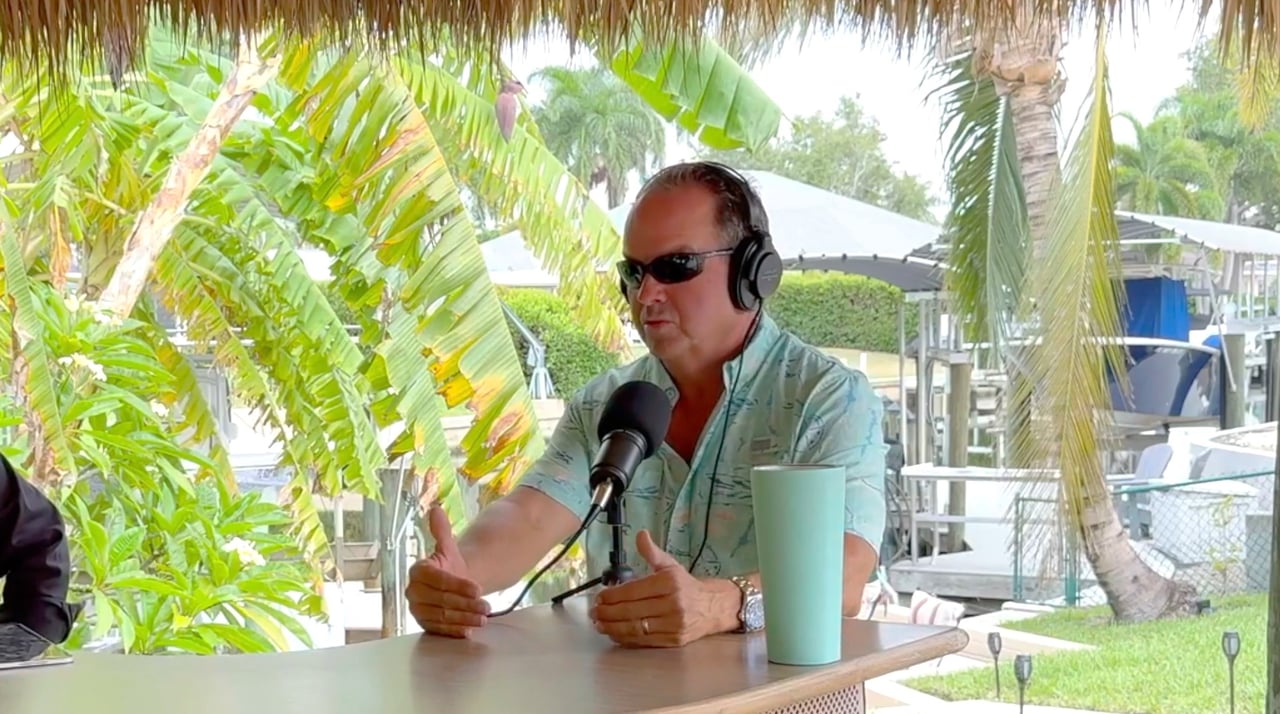
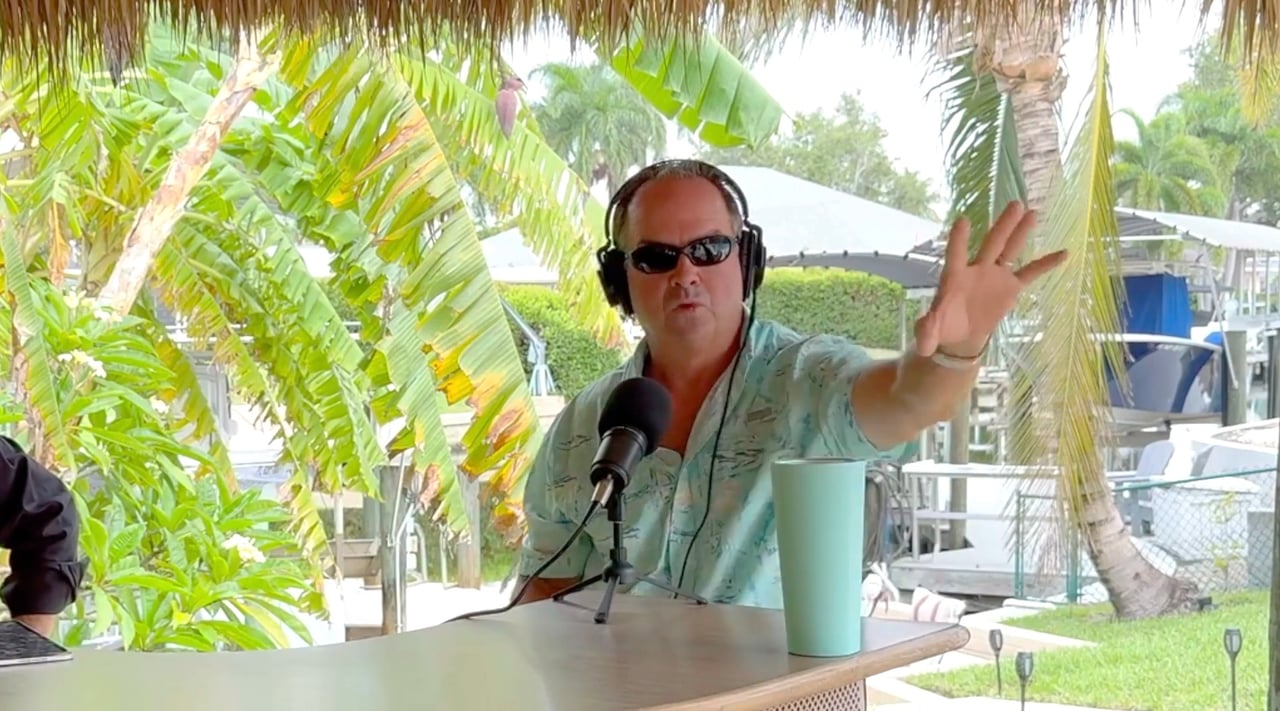
Watch me share this wisdom and knowledge with you via this video clip from my "Lovin' the Florida Lifestyle" Podcast!
I’m always happy to talk through your situation — whether you’re a buyer, seller, or fellow agent who wants to bounce something around.
Drop a comment, send me a message, or give me a call at (239) 851-3861 . Let’s make sure the details that actually matter don’t get missed.
Florida Keys
Before I show a Florida waterfront home in the Keys, Cape Coral, or Fort Myers, I ask what boat you want. Draft, bridge height, and tide decide the neighborhood.
Florida Keys
A real Florida Keys real estate deal showed how a current wind mitigation inspection and one missing detail (the third nail) dropped wind insurance from $12,000 to $5,… Read more
Decades of waterfront expertise, deep local roots, and a passion for the Florida lifestyle define every client experience. The Shane “Waterfront” Wilson combines extensive real estate knowledge with unmatched insight into the Florida Keys and Southwest Florida markets—helping buyers and sellers navigate every step with confidence and ease.
Get In Touch With Our Team
SHANE "WATERFRONT" WILSON
ADDRESS ISLAMORADA 85960 OVERSEAS HWY STE 4 ISLAMORADA, FL 33036 FORT MYERS 7270-4 COLLEGE PKWY FORT MYERS, FL 33907